Trust-based philanthropy practices as solidarity practices
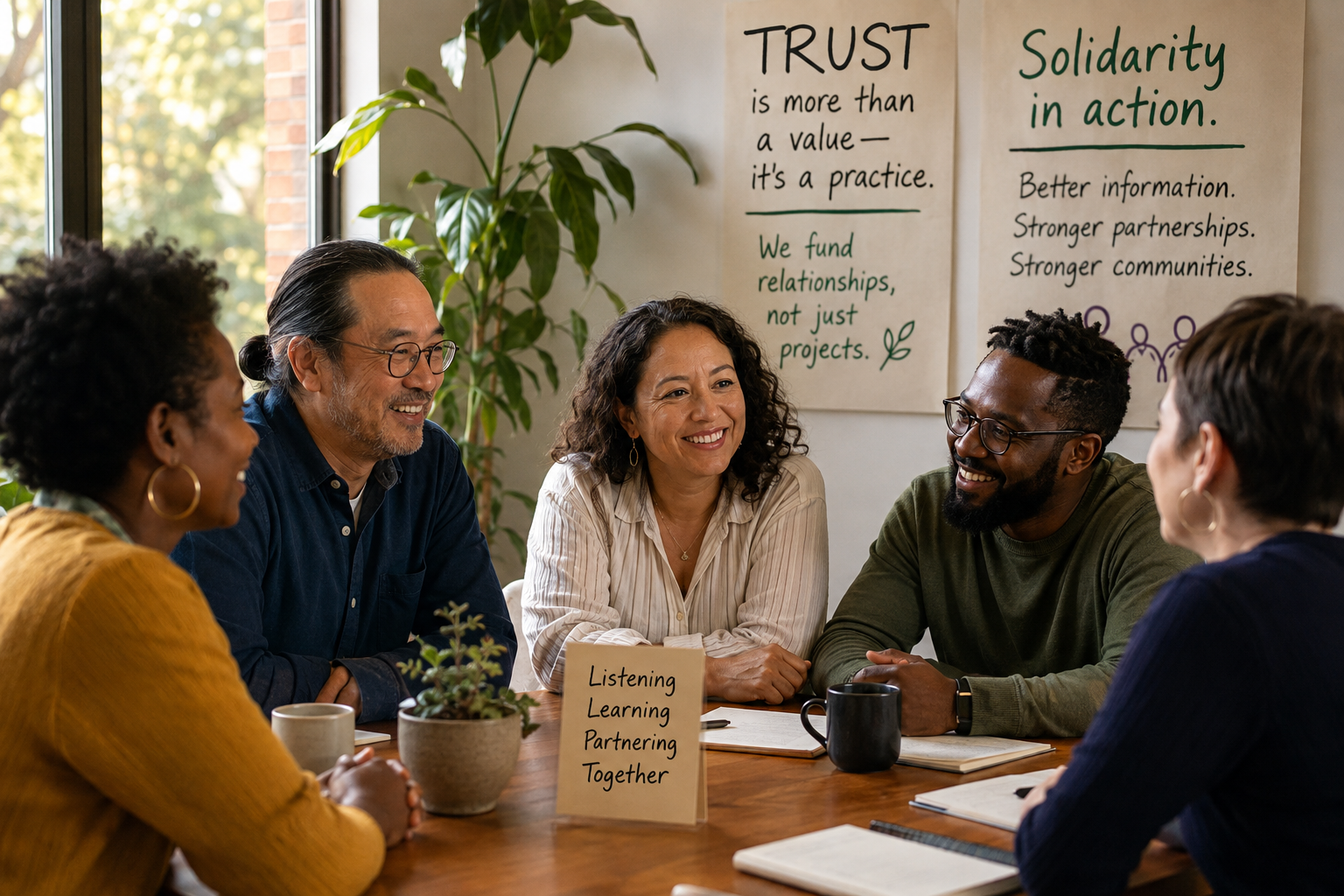
In many cases, trust-based philanthropy has led foundations to shift toward practices with grantee partners, including providing general operating support, reducing reporting requirements, and building relational partnerships that better meet funder and partner needs alike. These are solidarity practices — and they are needed right now to defend democracy. Phil Li shares some reflections of his journey and an invitation to join two upcoming learning sessions with the Trust-Based Philanthropy Project.
***
When you started working in trust-based philanthropy nearly a decade ago, what was not common sense then that is now?
Trust-based philanthropy is fundamentally a grantee-centric approach, and that has always been common sense to me. I wish more foundations had the experience I've had to see how this approach helps us better understand what’s happening on the ground with grantee partners and the communities they serve. In this moment, there's a real desire and curiosity to understand how to act in solidarity with partners, and there is a roadmap in some ways through trust-based philanthropy.
For example, instead of written reports, we have annual one-on-one conversations with grantees. This reduces administrative burden for our partners while giving us better information to guide how we show up.
Those conversations also create a feedback loop that informs our ‘beyond the check’ resources. We simply ask: how can we be a better partner, and what do you need? This year, partners identified needs around legal, fundraising, security and safety, and coaching support to navigate organizational transitions and crises. In response, we developed new capacity-building partnerships and tailored resources based on what partners told us they needed.
This listening-and-learning practice has led to professional development grants, an Executive Director Peer Learning Circle, and leadership program experiments, including the Liberatory Leadership Partnership and Supporting BIPOC Leadership Transitions.
Trust-based philanthropy has also encouraged multi-year, unrestricted general operating support grants, which we provide. That means being a funding partner for the long haul gives partners the security to focus on their work rather than constantly fundraising.
That’s a success, but we’re also grappling with for the first time in a decade, we're not accepting applications for new grant partners. In part, we're doubling down on our current grantees and doing what we can to make sure that they are okay. And it still feels painful because we — and the philanthropic sector — are making difficult decisions that can have significant impact. We’re grappling with that reality at the staff and board levels.
What did you find needed to shift to normalize trust-based philanthropy?
There is a scarcity and fear-based mindset that is pervasive in philanthropy. The sector has traditionally wanted the power to make the rules, tighten the reins, and hold organizations accountable to them as funders. Trust-based philanthropy offers an approach that counters that power-and-control dynamic.
I’d say trust-based philanthropy is normalized in the sense that it's now part of the lexicon of philanthropy, but I don't know if the practices are normalized. Adoption has remained relatively limited because shifting practices is hard, especially if you are trying to figure out all the things by yourself; you’ll inevitably get stuck.
Rather than getting stuck and giving up, what if you had a peer group going through the same process — people you could consult, ask questions of, and learn from without feeling like you should already have the answers and figured it out?
What is next in your journey with trust-based philanthropy?
Trust-Based Philanthropy Project is piloting Trust-Based Action Cohorts in a handful of cities across the country, bringing practitioners together to share challenges and solutions, exchange knowledge, and learn from one another as they put trust-based philanthropy principles. Having a sounding board and a community of peers makes it easier to keep moving forward, and I’m excited to be a part of it.
On September 18, we’re hosting two in-person sessions in New York City in collaboration with the Trust-Based Philanthropy Project.
Breakfast: A session for funders who are curious about trust-based philanthropy and want to learn more. Attendees will have the opportunity to hear from Pia Infante, Executive Director of Trust-Based Philanthropy Project, and ask questions.
Lunch: A session for funders already practicing trust-based philanthropy who want to deepen their work by joining an action cohort. Mailee Walker, Executive Director of the Claniel Foundation, will share lessons from piloting a cohort in Philadelphia to bring practitioners together to advance their trust-based work.
Whether you join a cohort or experiment in other ways, this moment is an invitation to try these practices and discover the benefits — not only for your partners, but for your organization. When you build more trusting relationships, you gain better information and a clearer understanding of what's really happening from your partner, and are better positioned to respond to what your partners actually need.
Reach out to Phil Li (pli@rsclark.org) if you are interested in attending an upcoming session.