Introducing RSCF Practitioner-in-Residence, Ananda Valenzuela
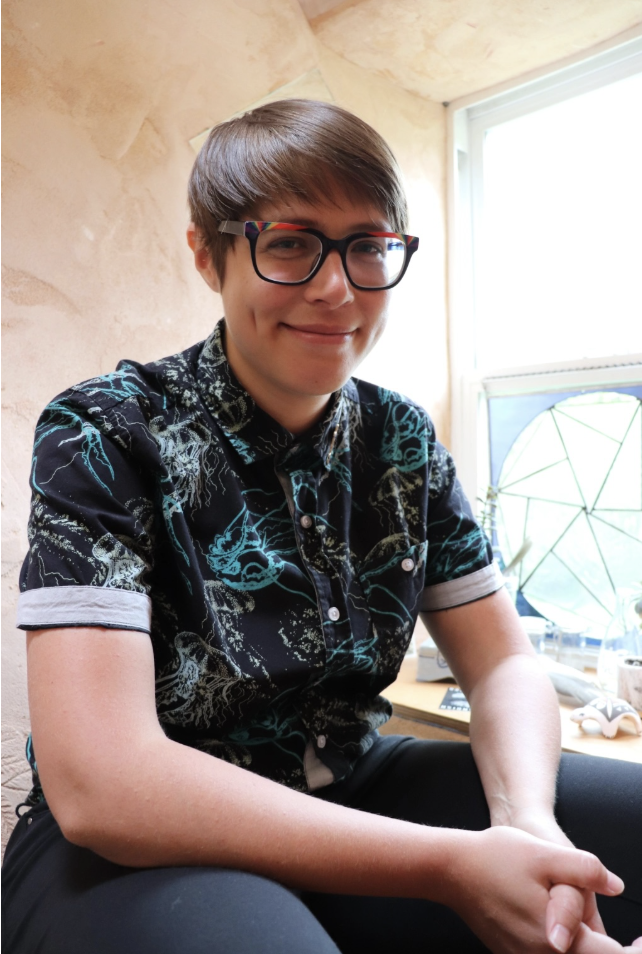
We are continually inspired by the courage and creativity of our grant partners—especially in today’s challenging climate. Their ingenuity has pushed us to expand our own thinking about how to listen to our partners without adding burden and respond more deeply with support beyond the check. In this series, we’ll share what we’re experimenting with and what we’re learning along the way.
RSCF, Trish: Ananda, how do you like to be known these days? And what lenses do you view the world through?
Practitioner-in-Residence, Ananda: I’m Ananda Valenzuela and I use any pronouns. I grew up mixed (Latine and white) in Puerto Rico; growing up in a modern day colony really shaped my racial and social justice orientation. Growing up in that particular space invited me to question a lot of societal norms and ways we look at the world. It invited me to wonder if there are better ways to work together and to dream together. These days I do coaching, consulting and Interim Executive Director work with a particular focus on the question: how do we build more liberatory workplaces - more joyful and equitable ways of being together and achieving the kind of change we want to see in the world?
I'm particularly grounded in a sense of possibility as someone who's queer and nonbinary, to naturally lean towards that sense of many truths. I look at the world through the lens of indigenous wisdom, which grounds me in that sense of learning from all of our living kin, and not just seeing humans as the sole holders of knowledge in the world. Black liberation is another lens I see the world through. That lens welcomes learning, generative conflict, and connection to centuries of struggle for liberation - particularly the context of how the US’s history of systemic oppression shapes the world we live in today.
In terms of formative experiences, I went to Hampshire College where I was heavily involved in activism to change the internal workings of the institution. It was a huge learning curve for me and brought me to this fundamental question: how do we get groups of people to change? That's a question that I have continued to walk with my whole life. I've spent my career working at capacity-building organizations, and have a particular love for RVC - Rooted in Vibrant Communities - where I got to learn alongside incredible BIPOC-led-and-serving nonprofits and understand their needs around how to organize together effectively, how to change internally, and how to change the world externally. So I think that those are some of the spaces where I’ve been in dialogue and active learning, alongside endlessly reading and listening to podcasts.
Practitioner-in-Residence, Ananda: But I’m curious about how you’d answer that question, Trish. How do YOU like to be known these days? And why did this Practitioner-in Residence role feel like an important investment for the Foundation right now?
RSCF, Trish: Oh right, yes. So I'm Trish Adobea Tchume and I’m the Senior Director of Leadership Research and Practice here at the foundation. Beyond titles, I like to be known as a weaver. So I’m lucky that a big part of my job and a core principle of our trust-based grantmaking approach is listening deeply for what grantees need “beyond the check” to step into liberatory leadership. Then I get to joyfully connect them with the abundance of people and organizations that can support those needs.
This Practitioner-in-Residence role grew out of that spirit. We see from our grant partners that as we're moving into this particularly fraught moment in the history of change work, there's a bunch of things that organizational leaders know they need: secure funding and legal support, for example. And we’re responding to those known needs as best we can via our resource bank. But then there's a huge array of things that leaders don't know is coming. We know that most of our grant partners typically turn to coaches, capacity builders, and organizational development practitioners when they are navigating fear and complexity. That got us thinking first about what it would look like for our grant partners to be able to easily access timely help around these challenges. Then we thought about who has the skills and knowledge but also the temperament to be meeting folks in this moment. And you, Ananda, were one of the first folks that came to mind.
RSCF, Trish: So, Ananda, this is a space for you to directly support our grant partners. What is the invitation to them?
Practitioner-in-Residence, Ananda: I welcome folks to reach out with whatever kind of problem they’re facing. Whether it's questions about your own internal life journey or difficult tensions in the workplace. I welcome strategic questions about the future of your organization, questions around how to structure your work, how to navigate power dynamics, decision making, accountability, effective feedback. How to build a joyful, equitable organizational culture or how to build a learning organization - all of those kinds of things!
And I'd also love to dream together about the future - what kind of more liberatory world we want to build. I've noticed how we are stuck in a lot of patterns in our workplaces - how we operate together, how we relate to one another - that are really steeped in unhealthy ways of being. I'd love to be in dialogue with your grant partners around questions like: how do we do the work better? How do we better serve our communities? This is an incredibly stressful and horrifying time as a country. How do we work together joyfully and generatively? How do we do it in a way that is healing and that models the beautiful fact that we can walk a different path, that we can work together in ways that are fundamentally different from our societal norms?
RSCF, Trish: It’s bringing to mind for me this tension that I know you're often holding: Your core work involves supporting nonprofits, right? But I've known you to be someone that openly believes that nonprofits are not actually going to be the vehicle to achieve our movement dreams. So why are you still doing the very hard work of trying to strengthen nonprofits?
Practitioner-in-Residence, Ananda: What a great question. I’m such a believer in the both/and. To me, what you've named is fundamentally the question of abolition versus reform - do we abolish the nonprofit industrial complex and walk a radically different path? I do believe we need different things - different vehicles, different ways of working. For me, that looks like everyone having a guaranteed income, giving everyone some of the wealth that exists in the world. There was a study that came out that showed that we just need 30% of the world's resources to ensure everyone has a house and food and can support their families. We could all live well with just 30% of the world's resources! The problem, of course, is that the richest 1% has amassed so much of that wealth that so many people don't have enough. So yes, I think that in some ways, nonprofits can be used as a smoke screen to distract us from these deeper problems in our society. These beautiful dreams of a different future need to be held in parallel with the fact that we are in the midst of a billionaire coup and rapidly losing the last vestiges of our democracy, and we cannot wait until we have that beautiful future. We still need to be helping each other right now, in this moment, in this incredibly hard time.
And right now, 501(c)3s are one of the most effective ways to move money directly to supporting people in need. So I pour so much of my time and energy into helping nonprofits do better with the tools they have. Because we're going to keep needing nonprofits, and we are so reliant on them right now to do so much good in the world. And I don't want to discard all that. I don't think that's the way we want to act in a more liberatory world. Sometimes I go into nonprofits and people are heartbroken, scared, and angry, because people are relating to each other in these painful ways that we learn from dominant society. But these learned behaviors are not okay. There's so much healing that we can do. How we work together right now, whatever vehicle you use, nonprofit or otherwise, can be far more joyful and sweet and that feels well worth investing my time in.
RSCF, Trish: Yes, these organizations are sites of practice, right? We need help in practicing something other than what we've inherited from dominant culture. What advice or offerings do you have for us and other funders around what needs to change in philanthropy based on what you’re seeing?
Practitioner-in-Residence, Ananda: I appreciate the Robert Sterling Clark Foundation for inviting in learning and critique. It’s such a key element of how we move together toward a better future. For funders at this moment the response cannot be a 6% instead of 5% payout from endowments. It should be far more radical, because these are radical times. For me the headline would be that foundations should be deciding right now to spend 50% of their endowments (or all of it!) to really pour all of their resources into this moment, and giving out all that money as multi-year, unrestricted funding.
We're going in a really terrifying direction as a country. And as a result, there's this incredible amount of emotional dysregulation happening in our sector. So many nonprofits are having their funding suddenly canceled. They don't know if they'll get future funding. Folks are thinking of closing their doors, laying off staff in the midst of all of that. There's no way that foundations can fill the huge gap in government funding. Governments play an incredibly important role in maintaining our social safety net. Since so many wealthy people do not give generously (rarely giving more than 2-3%), this voluntary approach to fixing our societal problems that we inherited from England is clearly not solving our problems. But foundations can still make a huge difference in this moment by investing deeply in the work and helping tend to this tattered social safety net as much possible as we work towards building a more liberatory future.
RSCF, Trish: You’re clearly thinking (and researching) a lot about this. And I know in addition to coaching and offering workshops for the RSCF community, you’re going to be doing more writing on liberatory practice during this residency. So thank you. We’re really honored and excited to be learning and dreaming and practicing alongside you this year.
Practitioner-in-Residence, Ananda: Thank you. It's such a gift to work with y'all.