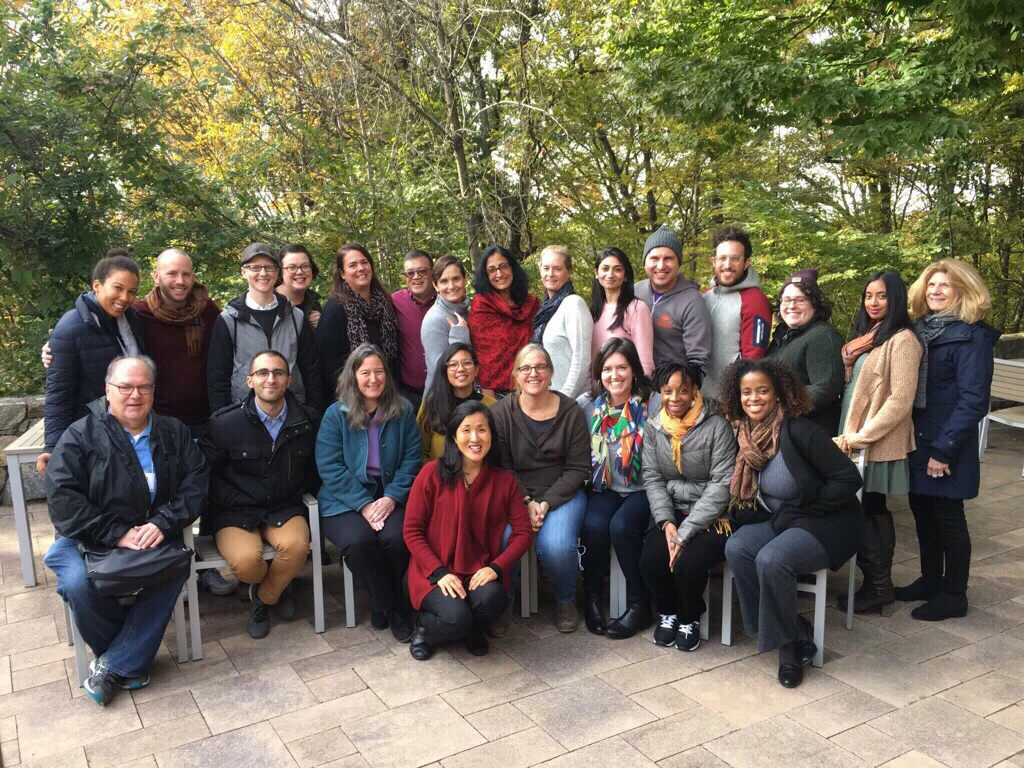
We were pleased to sit down with Deborah Meehan and Ericka Stallings, Co-Executive Directors of our grantee partner Leadership Learning Community (LLC). Deborah founded LLC 20 years ago, and Ericka just joined her at the helm earlier this year. Together they bring thought-provoking perspectives on leadership development, networks, and embracing an evolving style of management within their own organization. The interview has been edited and condensed.
Read MoreAbout a year and a half ago the Foundation began a journey to explore the answer to an intriguing question: What happens when you bring together a group of action-oriented systems leaders from multiple sectors, each of whom has an ability to influence and move resources, build their trust and capacity to work across difference, and provide space and support for them to think of powerful ways to collaborate to improve economic mobility at the intersection of racial equity?

Read MoreI often draw the parallel of a leadership development program being like boot camp, an apprenticeship, a practicum or exposure. To me, completing the program is not the end, it’s actually the beginning.
Read MoreAs with every young organization, we are making some mistakes as we grow. By acknowledging and reflecting upon them, we hope to avoid making similar oversights in the future.
Read MoreWhen North Star Fund started 40 years ago, our founders wanted to shift power dynamics in philanthropy. They didn’t want to continue the tradition of wealthy white folks making grantmaking decisions. Our grantmaking decisions are made by a group of volunteer grantmakers who are working on the front lines in the communities where we fund – organizers and activists that understand the day-to-day realities our grantees are facing.
Read MoreWhat is our responsibility as storytellers? As a filmmaker and the Communications Manager at the New York Foundation, it is my job to create content that moves people. I often engage with communities of color that have endured historical injustices and have dealt with the repercussions of structural oppression.
Read MoreI have an aversion to the phrase “best practice,” because it connotes that there is an optimal way to do something. It’s as if a lab has tested all the possibilities and has anointed a winner. It discourages thinking in different ways. And, in reality, these ideas are only ‘best’ until something better comes along.
Read MoreIn my almost-30 years as a youth worker, program director, consultant, board member, executive director, and now as a funder, I have always had a special interest in ‘worst practices.’ In professional settings, I have long been willing to share my successes – or ‘best practices’ – with colleagues.
Read MoreMy colleague Lisa Cowan revels in drawing on “worst practices” as a way for us to learn and improve the ways in which we work at the Foundation, from operations and administration to grantmaking. So we have been quite excited on more than one occasion when we have we happened upon funder “fail fests,” where our colleagues promise to describe mistakes and consequences.
Read MoreIt’s important for us to approach our work with the understanding that it’s the Foundation’s job to get to know prospective grantees, and not theirs to educate us. They’ve got important work to do. And so do we.
Read MoreI was at an engaging talk this past weekend that reminded me why effective communication must be at the core of our work at the foundation. The talk topic was ‘How to use behavioral economics to shape food policy and make choices of what to put in our bodies.’ Some of the ideas that were discussed are common here in New York City: taxing sugar-laden beverages and providing calorie information on menus. But one research study grabbed my attention (I know, it may not sound that exciting, but stick with me here!).
Read MoreLast weekend I took a yoga class near my home in Brooklyn. The fit and kind young yoga instructor started the class by interpreting some of the dharma. Now to be honest, I usually zone out during this part–I have a hard time taking ancient wisdom from 23-year-olds. But this time the message permeated a bit as the instructor talked about the Bhagavadgita, the Hindu text which speaks about giving:
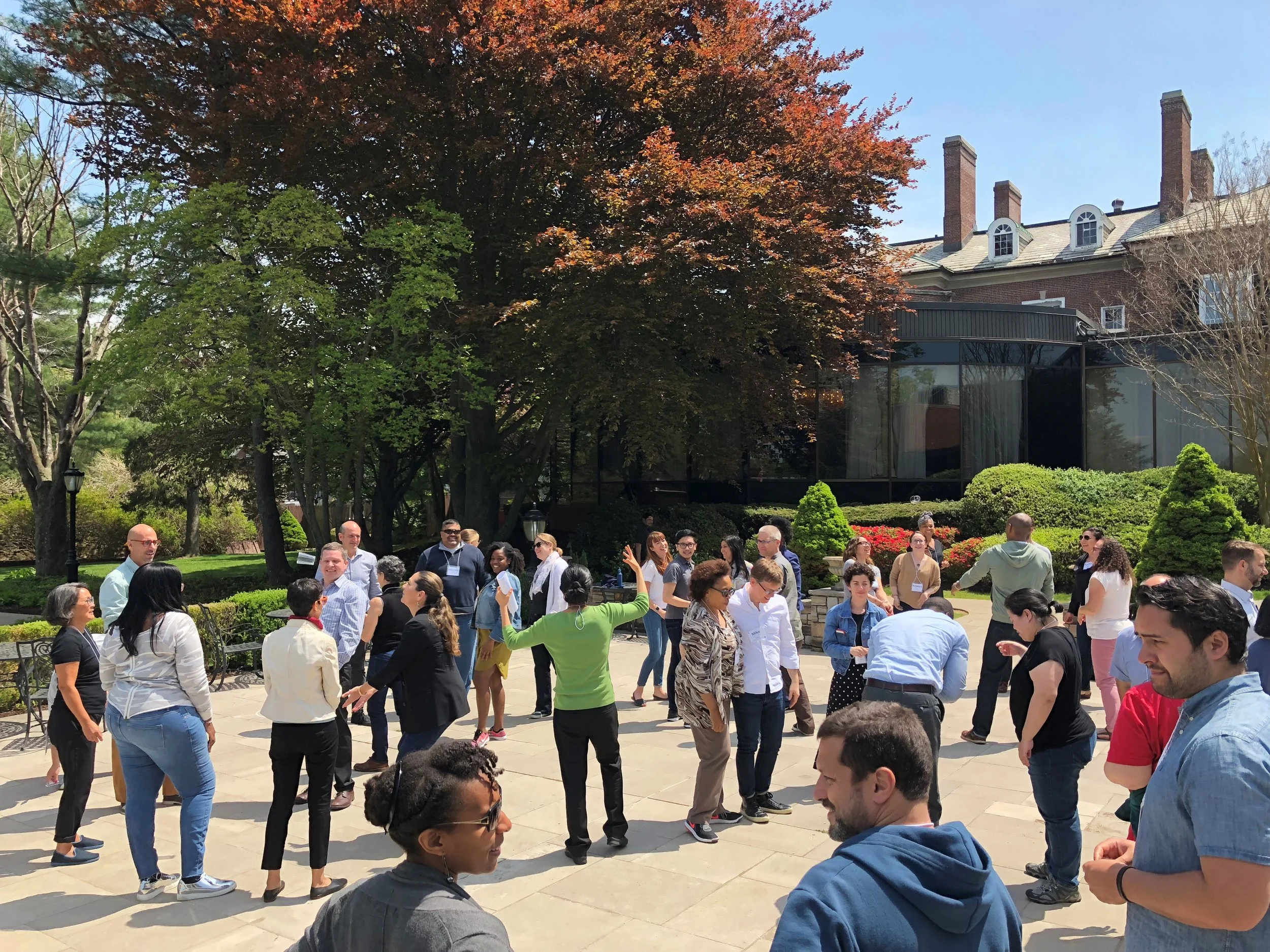
Read MoreTwo weeks ago, we invited the program directors from our New York City grantee partner organizations to join us on a retreat. Our plan is to do this annually, so that our partners get to know each other’s programs and build community. This part of our work falls under the Trust-Based Philanthropy principle of providing “Support Beyond the Check.” We also think of thought partnership, support around leadership transition, introductions to potential funders or allies, and lending our offices for off-site meetings as ways we support grantee partners beyond the check – some of them more helpful than others.
Read MoreTwo year ago, we launched a new grantmaking area here at Robert Sterling Clark—we now fund network and leadership development programs. As we developed this new grantmaking area, we also implemented a new way to evaluate our grantmaking. We asked each of our grantee partners to complete a self-assessment tool to help us understand the progress they were making with our support.
Read MoreI started my career as a grant writer for a small nonprofit organization in Boston. I remember how strange the grant-seeking process seemed to me then– I would write some things down and put it all in an envelope (this was pre-email—use your imagination).
Read MoreIt’s a Matter of Trust: Introducing a New Blog Series on Trust-Based Philanthropy
As many of you readers already know, the Robert Sterling Clark Foundation utilizes a trust-based philanthropy approach in our work. That means we thrive on relationships grounded in mutual trust and respect, and we seek to imbue those traits into every interaction—whether it’s with a grantee partner, an individual leader, a funder, a collaborator, or an ally.
Read MoreFunder Spotlight: Headwaters Foundation
Headwaters Foundation in Missoula, Montana is a new health conversion foundation that has been committed to embracing trust-based philanthropy since its inception. This commitment has led to a number of innovations – including GO! Grants that are designed to put grant funds in the hands of grantees in less than a month – as well as some informative lessons. As part of our ongoing series on trust-based philanthropy, we sat down with Headwaters CEO Brenda Solorzano to get the full scoop.
Read MoreHi everyone. Before we begin, thank you to all the colleagues who donated to my organization on my birthday last week. It helps our mission of developing more leaders of color and strengthening organizations led by communities of color. If you haven’t donated, it’s not too late.
This blog post is going to be a little more serious than usual. I’m going to say things that may be very difficult for many people to hear. Especially if you work for a foundation that provides restricted funding, please take a deep breath. I don’t expect everyone to agree, but we need to have this conversation. Next week’s post will be lighter. Unless something else comes up.
Read MoreTHE ROBERT STERLING CLARK FOUNDATION CONVENES LEADERS TO TAKE INNOVATIVE APPROACH TO ADVANCING ECONOMIC MOBILITY IN NEW YORK CITY
(ROBERT STERLING CLARK FOUNDATION LAUNCHES NETWORK OF CROSS-SECTOR LEADERS TO ADVANCE ECONOMIC MOBILITY IN NEW YORK CITY)
City leaders across nonprofit, government, and business sectors join forces to make systems impact
Read MoreAbout two years ago, the Robert Sterling Clark Foundation had a chance to rethink both what we do and how we do it. We adjusted our giving programs—painfully letting go of important issues and organizations with the belief that we could do more for New York City with a more focused giving strategy.
Read More